





CookieRun: Kingdom review
 Analysis by GetAllApps
The first thing I like about CookieRun: Kingdom is how quickly it gives me two kinds of progress to care about. I can send a team of cookie characters into an adventure, then return to a kingdom that I’m building and improving. That blend makes the game feel more personal than a role-playing game focused only on battles: the place I develop is also the reason I want to come back and see what my team can do next.
Devsisters Corporation’s free role-playing game has a playful style, but there is more to its appeal than cute characters. Its central rhythm is easy to grasp: take an action, see the result, collect something useful, and use that progress to prepare for another round. I found that rhythm satisfying when I wanted a game to check in on between other tasks. It is less suitable if you want a tightly focused adventure with no town management or ongoing progression to keep track of.
From a new kingdom to the first adventure
The opening idea is straightforward: build up a home for your cookies while assembling a team for adventure. The two parts give the game different speeds. Kingdom building offers a calmer, more deliberate activity; the RPG side gives me a reason to think about who belongs on the team and what I should improve before moving on.
That combination matters because neither activity has to carry the whole experience. If I’m not in the mood for another battle, tending to the kingdom still feels like progress. If I want something more active, the adventure provides a change of pace. The result is a game that can fit a brief visit or a longer stretch of play, although the many things asking for attention can also make it feel busy.
I’d recommend starting with a simple priority rather than trying to optimize every part of the kingdom at once. Pick one useful improvement, then return to the adventure with a clear purpose. This keeps the early loop satisfying: I know what I’m working toward, and the next action feels connected to the last one instead of becoming a checklist without a payoff.
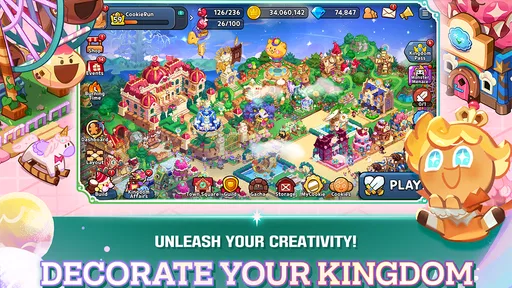
The kingdom is not just decorative scenery around a combat game. It gives progression a visible home, which is a meaningful difference from many role-playing games where improvements are mostly menus, numbers, and equipment screens. If you enjoy watching a base take shape, that extra layer is a strength. If you would rather spend all your time choosing attacks and exploring, it may feel like an obligation attached to the part you actually want.
Why the two-part structure works
In a usual mobile RPG, the main question is often what to fight next or how to make a team stronger. Here, I also have a reason to think about the kingdom itself. That creates more small goals, and small goals help make a return session feel worthwhile even when I don’t have time for a long run through the adventure.
The trade-off is divided attention. A player who likes clear, single-track progression may find it harder to decide what deserves attention first. My practical advice is to treat the kingdom and the team as supporting each other, not as two separate games that both demand perfect upkeep. A modest, steady approach is more enjoyable than trying to make every decision at once.
Choosing a team without turning it into homework
The team-building side is most rewarding when I make decisions for a reason: a character needs attention, a stage has stopped feeling manageable, or I want to see how a different lineup performs. It’s tempting to treat every new option as an urgent upgrade, but that can turn a playful game into a constant comparison exercise. I prefer to make one change at a time, then see whether it actually improves the next attempt.
That approach also makes setbacks more useful. If a battle goes poorly, I can consider whether the issue is team choice, preparation, or simply trying again with a better sense of what to expect. The game’s loop works best when I’m learning from the result rather than making random changes to everything. For someone new to RPG team-building, that is a gentler way to engage with the systems than chasing an imagined perfect setup from the start.
Action, feedback, and the reward of progress
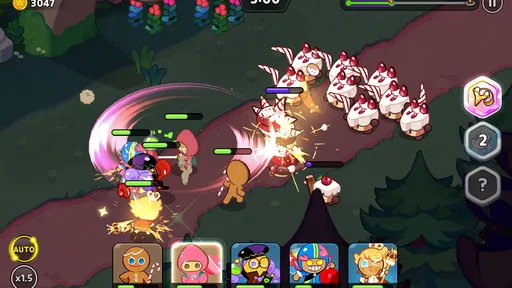
The adventure gives the game its active pulse. I send my cookie team into a challenge, watch the outcome, and use the result to decide what to do next. That sequence is easy to understand even if I don’t want to study every detail. The important feeling is that action produces feedback: success moves me forward, while a frustrating result gives me a reason to reconsider my approach.
That feedback is also what stops the kingdom side from feeling disconnected. The town is where I invest in ongoing progress; the adventure is where I test the team and create another reason to improve it. When these parts reinforce each other, the next session has a natural starting point. I can return with a small goal—make an adjustment, develop the kingdom, or try the next challenge—rather than wondering what the game expects me to do.
One useful habit is to notice what kind of progress a session produced. If I improved the kingdom, the next visit can focus on taking the team back into adventure. If a challenge showed that my lineup needs work, I can use the next session to prepare rather than repeating the same attempt without a plan. That simple alternation helps keep the loop from becoming a blur of taps and rewards.
There is a satisfying payoff in seeing separate actions add up. Building the kingdom gives progress a visible form, while adventure makes team decisions feel consequential. That’s more engaging for me than a game in which every reward simply raises a number and sends me back to the same activity. Here, I can change what I focus on from one visit to the next, while still feeling that I’m working toward a shared goal.
When the loop starts to feel crowded
The same structure can become a source of friction. With kingdom development and RPG progression both in view, a short visit can leave me with several possible next steps. Players who enjoy collecting goals and steadily working through them will probably welcome that. Players who want to open a game, complete one self-contained mission, and leave may find the broader routine less relaxing.
I also wouldn’t expect every session to feel like a dramatic adventure. Some visits are more about maintaining momentum and choosing a useful next step than experiencing a major story beat. That is normal for a game built around a persistent kingdom and ongoing character growth, but it is worth knowing if you are looking for a compact, start-to-finish story that asks little of you between play sessions.
When I hit a frustrating point, I find it better to pause and return with a specific question: do I need a different team approach, or would I rather spend this visit on the kingdom? That choice is more useful than pushing through while annoyed. It also shows the game’s best escape valve: the two-part design gives me another kind of progress to work on when one side feels stuck.
Who will enjoy returning to it
CookieRun: Kingdom is a good fit if you like character-driven RPGs but also want a home base that grows alongside your team. It suits players who enjoy small, regular goals, and those who like shifting between tactical choices and lighter building. Its bright presentation may draw in casual players, while the combination of team development and kingdom progress gives more dedicated players several ways to stay involved.
It is less likely to satisfy someone who wants a purely hands-on action game or a traditional RPG with most of its attention on exploration and a single narrative path. It may also be a poor match if you dislike games that encourage repeated check-ins or offer many different forms of progression. In that case, a more linear adventure or a focused battle game would be a better use of your time.
For an everyday scenario, imagine you have a few minutes while waiting for a ride or taking a break. You can choose one small kingdom task, check how your team is progressing, and leave with a clear next move for later. On a longer evening, you can spend more time shifting between building and adventure. I like that flexibility, though the game works best when I’m comfortable returning to an ongoing world rather than expecting each visit to wrap everything up.
The game is free to start and is rated Everyone 10+. Optional in-app purchases range from $0.99 to $209.99 per item, so I’d recommend deciding in advance whether you want to spend at all. A free-to-play structure can make purchases tempting when progress feels slow; setting a personal limit helps keep the focus on whether the game itself is enjoyable. It has a 4.8 average from around 1.5 million ratings, with over 10 million installs, but those figures shouldn’t replace your own sense of whether this particular mix suits you.
It was released on January 19, 2021, and its minimum Android requirement is version 7.1. Those details make it straightforward to check whether an older Android device meets the stated baseline. The game’s content rating and price are useful starting points for a family decision, but I’d still consider whether a child is comfortable with optional purchases and the steady return-based structure before recommending it.
My verdict on the return loop
The reason I come back is not just that there is another battle to try. It’s the connection between doing something, seeing a result, collecting progress, and having a fresh reason to act again. A kingdom improvement can make the world feel more developed; an adventure can expose a new team decision; either one can set up the next visit. That loop feels rewarding when I choose a manageable goal and let progress accumulate naturally.
My main reservation is that the same ongoing structure can feel demanding if I want a game with a clear stopping point. The kingdom and adventure together create variety, but they also create more to keep in mind than a single-focus RPG. I’d choose this over a standard battle-only alternative when I want a more personal, evolving world. I’d choose something more linear when I want to play through a contained story without maintaining a persistent routine.
Overall, I recommend CookieRun: Kingdom to anyone who enjoys cute character teams, visible town-building progress, and a reason to return for short or longer sessions. It is not the simplest choice for players who dislike ongoing goals, but its mix of action, feedback, and reward gives each visit a purpose. If that steady cycle sounds comforting rather than demanding, it’s an easy game to make part of your regular rotation.
Pros and cons
Pros
- Its colorful character designs give the kingdom a distinctive look.
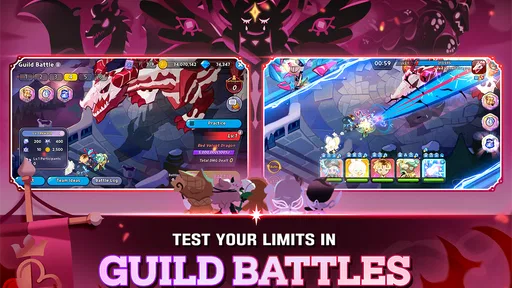
- Guild battles add a cooperative goal beyond the main story.
- Cookie interactions make the kingdom feel more lively.
- Decorating lets players personalize their home kingdom.
- Frequent events offer fresh activities and rewards.
Cons
- The many menus can make the game feel overwhelming at first.
- Progress can slow down when upgrade materials run short.
- Some limited-time cookies may be difficult to obtain.
- Kingdom building requires regular attention to keep production moving.
- Long battles can feel repetitive during resource farming.


